


Fellows
The Williams Foundation brings together experts academia and military from all over the world who provide the highest quality research, policy recommendations, and analysis on a full range of public policy issues. We thank them for their support of the Foundation and their contribution to our goals.

Air Vice Marshal John Blackburn AO (Retd)
John Blackburn is the Chair of the Institute for Integrated Economic Research – Australia.
He retired from the Royal Australian Air Force in 2008 as the Deputy Chief of the Air Force, following a career as an F/A-18 fighter pilot, test pilot, and strategic planner. Since 2008, John has consulted to Industry and Government Agencies and has undertaken a range of National Security and Resilience related studies, as a RAAF Reservist until 2019 , and also with the Institute for Integrated Economic Research - Australia, the Australian Security Leaders Climate Group, the Kokoda Foundation, and the Sir Richard Williams Foundation. For the past four years he has led a National Resilience Project that has highlighted a lack of resilience in Australia in addressing the pandemic, climate change impacts, the ongoing energy transition, and growing regional security threats.
He is an advisor to Canberra based AICoLab Alliance and is using developmental Agentic AI systems to further refine the recommendations of the IIER-A National Resilience Project. His current focus is on the potential impacts of AI on National Security and Resilience.
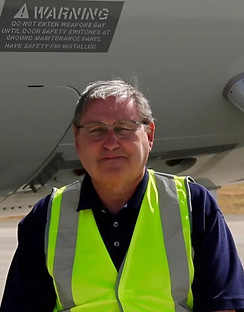
Dr Robbin Laird
Dr Robbin Laird is a defense analyst and strategic studies expert with more than four decades of experience examining global security challenges, military transformation, and the evolving character of warfare. He is Co-Founder and Editor of Second Line of Defense and Defense.info, a member of the Board of Contributors for Breaking Defense, and a regular contributor to the wider international defense press.
Dr Laird began his career as a Soviet specialist during the Cold War, working in and with the U.S. government, the Center for Naval Analyses, and the Institute for Defense Analyses, and later engaged extensively on post-Soviet nuclear issues in Russia, Ukraine, and Belarus. He recently has published books on The Global War in Ukraine: 2021-2025 and The Global War in Ukraine: An Essay on the Changing Global Order which take his work forward in this area of his work.
He has done frequent field analysis with U.S. and European forces over the years and have published several books on the transformation of the U.S. Marine Corps, the fifth-generation revolution and naval modernization. And he has worked for many years on the evolution of maritime autonomous systems and the drone wars.
A frequent visitor to Australia, Dr Laird has worked closely with The Sir Richard Williams Foundation for many years, supporting its seminars on the transformation of the Australian Defence Force and publishing several books on Australia’s defense challenges, the ADF’s evolution toward distributed operations, and the Indo-Pacific strategic environment. Based in the United States and in Paris, France, he regularly travels across Europe and globally to conduct interviews with senior policymakers, military leaders, and industry executives, focusing on alliance dynamics, autonomous systems, and the integration of emerging capabilities into 21st-century combat forces.

John Conway
John has over 40 years’ experience in the business of air and missile defences in an international context. He is currently the Head of Practice and Managing Director of Felix, a boutique professional services company established in 2017 to provide consulting, strategic advisory, and brand strategy and creative services to Defence, and the defence technological and industrial base. He was previously a business development and strategy executive with Raytheon Australia specialising in air combat integration, electronic warfare, advanced weapons systems, test and training ranges, and integrated air and missile defence.
John retired from the Royal Air Force as a Group Captain in 2010 having served 24 years in a number flying, staff and senior command roles. His operational experience on F4 Phantom and Tornado F3 aircraft included Cold War Europe, the South Atlantic, the Balkans, and the Middle East. He commanded the United Kingdom’s largest Permanent Joint Operating Base at RAF Akrotiri in Cyprus between 2005 and 2008 enabling the airbridge into Iraq and Afghanistan, and supporting strategic ISR operations in the eastern Mediterranean.

Air Chief Marshal Sir Mike Wigston KCB CBE ADC
After 37 years of service, Air Chief Marshal Sir Mike Wigston retired from the Royal Air Force in 2023. As Chief of the Air Staff from 2019-2023, Sir Mike empowered innovation at every level and advocated for the adoption of new technologies like space systems, uncrewed aircraft, swarming drones, and AI. He conceived and established UK Space Command in 2021, and played a leading role establishing the multi-billion, multi-decade program to build the UK’s next generation combat aircraft.
A regular visitor to Australia, Sir Mike is now a board member and senior adviser on aerospace, defence and technology in the UK, Europe, and Australia, and a Visiting Professor at King’s College London.
Life Members
Life Members have made outstanding contributions either directly to the Foundation or by shaping and influencing policy decisions regarding Australia’s defence, particularly air power.

Air Vice Marshal Brian Weston AM, FRAeS (Retd)
Brian Weston’s RAAF career included flying tours on the CAC Sabre, Dassault Mirage IIIO and the F/A-18, with command appointments at squadron (No 75 Squadron), base (RAAF Base Richmond) and group (Tactical Fighter Group) level. His staff appointments spanned personnel, force development and analysis, defence force structure, and the drafting the Operational Concepts (Air) for the Defence of Australia. He attended the USAF Air Warfare College and the Royal College of Defence Studies, and was a member of the Directing Staff of the Australian Joint Service Staff College. In 1993, with Peter Moran, he conducted the Post Implementation Review of the Defence Regional Support arrangements of the ADF.
On completion of his appointment as Assistant Chief of Defence Force for Operations, he transferred to the RAAF Reserve where, following the Black Hawk mid-air collision, he and John Faulkner - Deputy Chair of Air Services Australia - conducted the Independent Review of ADF Airworthiness. Their Review recommended seminal change to the organisational framework for the regulation and management of airworthiness in the ADF.
In his post air force career, he served as Executive Director of the Australian Business Limited Defence Industry Unit; Executive Director of the Association of Australian Aerospace Industries; inaugural ‘Industry Chair’ of the Defence Capability Advisory Forum; and was a member of the Defence and Industry Advisory Council chaired by the Minister for Defence.
He has worked with Northrop Grumman, Lockheed Martin, P&O Services and Allied Technology Group; was a non-executive director of National Air Support operating the Coastwatch fleet of aircraft; chair of the SAI Global Certification Board (2002-2014); a consultant to the Australian Strategic Policy Institute on the Joint Strike Fighter Project; and was the Australian defence and defence-industry consultant to Northrop Grumman (2004-2023), during which its Australian presence expanded from four, to over 900 employees.
His qualifications include a BSc (Melbourne) and an MBA (Auburn), and his published papers include a history of the Australian aviation industry for the RAAF Aerospace Centre; the future of Unmanned Aerial Systems for the Sir Richard Williams Foundation; and a paper titled ‘A Coming of Age for Australia and its Air Force’ for the RAAF Air Power Development Centre.
He was appointed a Fellow of the Royal Aeronautical Society; an Honorary Visiting Fellow at the Aerospace, Mechanical and Civil Engineering School at UNSW@ADFA (2005-2012); a Board Member of the Sir Richard Williams Foundation (2016-2022) and was the foundation’s On Target columnist in Australian Aviation and the Australian Business and Defence Review. He is a member of the McNeill Society of the St Joseph’s College, Geelong, Foundation.
He met Renate on the school bus; with their second daughter being the first female ADFA graduate to earn a RAAF pilot’s brevet. In 1999, he took up preparing and racing historic sports cars, with Renate as Team Boss. He was founding president of the Group S Racing Association (2006-2010) and is a life member of the GSRA.

Alan Titheridge AO
Alan Titheridge finally left the work force in 2021 after serving as L3Harris’ Corporate Vice President Australia Operations and MD L3 Harris Australia for 14 years. He retired from the Royal Australian Air Force in 2002 and ran his own consulting business prior to joining L3 in 2007.
During his air force career, he flew in excess of 4500 flying hours, mainly in tactical fighter aircraft including the Mirage III and the F18 Hornet. He commanded No 77 Fighter Squadron, No 81 Fighter Wing, Australia’s Tactical Fighter Group, and the Australian Defence Force’s Air Command. He has also served in a range of senior staff appointments in the Australian Defence Force including Director General Joint Operations and Plans, Head of Strategic Command Division and Deputy Chief of Air Force.
He is a graduate of the Canadian Forces Command and Staff College and the United States Air Force Air War College. He has a Bachelors’ Degree in Science (Physics) from Melbourne University and a Masters’ Degree in Defence Studies from the University of New South Wales.
Alan was made a Member of the Order of Australia in 1985 and an Officer of the Order of Australia in 2001. Alan is married to Cheryl and they have three married children - Lisa in the US, Justine in Melbourne, and David, an Air Force pilot and now Air Vice Marshal – and seven grandchildren.

Ken Moore
Ken had an extensive career in the Australian Public Service with the Department of Defence. His last appointment was as the Defence Chief Finance Officer (Deputy Secretary level). Prior to the CFO position, Ken held a number of other senior management appointments in Defence including Head of National Operations Division that was responsible for the management and delivery of a large range of services to all Defence bases across Australia.
After leaving the APS, Ken worked for a number of years with the ACT Government as the Chief Executive Officer of Rhodium Asset Solutions (the Government’s vehicle leasing company) and Executive Director Shared Services ICT.
Ken holds two appointments:
-
Independent Chair, Audit Committee, Commonwealth Director of Public Prosecutions
-
Board Member and Treasurer Sir Richard Williams Foundation
Ken has tertiary qualifications in economics and accounting. He is a Fellow of CPA Australia and a Fellow of the Australian Institute of Company Directors. Ken is also a graduate of the Advanced Management Program at the INSEAD Business School in France and the Senior Defence Resource Management Program at the US Navy Postgraduate School in California.